



In high-grade steel manufacturing and continuous casting operations, controlling the morphology of non-metallic inclusions is a primary chemical challenge. Residual oxygen and sulfur severely degrade the mechanical properties of special steels, while alumina clusters often lead to catastrophic nozzle clogging in the tundish during continuous sequences.
Deploying a precisely formulated binary Calcium Silicon Alloy (CaSi) offers a highly effective thermodynamic solution. Below is a deep technical breakdown of the metallurgical reactions, grade classifications, and inclusion-modification mechanics of this essential deoxidizer and inoculant.
1. Thermodynamic Mechanics of Inclusion Modification
The operational value of Calcium Silicon lies in the violent, highly exothermic affinity calcium exhibits toward oxygen, sulfur, hydrogen, and nitrogen within liquid steel. Upon introduction into the ladle, the alloy undergoes a distinct sequence of chemical modifications:
- Vaporization & Stirring: Calcium possesses a boiling point below typical steelmaking temperatures, causing it to instantly transform into calcium vapor. This volatile expansion generates a localized kinetic stirring effect throughout the liquid bath, accelerating chemical homogenization.
- Inclusion Agglomeration: The volatile reaction forces fine, dispersed non-metallic inclusions to collide and coalesce into larger, low-density liquid complex aluminates and silicates that rapidly float to the slag layer.
- Morphology Alteration: CaSi successfully converts hard, angular, and abrasive alumina ($Al_2O_3$) inclusions into harmless, spherical liquid calcium aluminates. This eliminates ladle nodulation and completely prevents nozzle blockage during continuous casting.
2. Technical Grade Classifications and Chemical Matrix
To ensure precise mass balance calculations and targeted recovery rates in different converter or electric arc furnace (EAF) operations, our production line maintains strict elemental thresholds across five standardized grades:
- Ca31Si60: Optimized for aggressive deoxidation requiring minimum 31% Ca and 60% Si boundaries.
- Ca28Si60 & Ca28Si55: Standard universal grades balanced for structural steel refinement.
- Ca24Si60 & Ca20Si55: Engineered for targeted silicon adjustment with controlled calcium injection.
- Ca16Si55: Low-calcium matrix tailored for specialized alloy steel criteria.
- Trace Element Control: All grades feature strictly monitored maximum limits for trace companion metals, including iron (Fe), aluminum (Al), carbon (C), sulfur (S), and phosphorus (P), preventing accidental melt contamination.
3. Cast Iron Inoculation and Graphite Uniformity
Beyond steel refinement, the binary composition functions as a high-efficiency inoculant in gray and ductile iron foundries. When added directly to the melt, it alters the solidification kinetics:
- Chilling Prevention: Reduces the tendency for structural "white mouth" (chill zones) along thin walls and sharp edges, improving subsequent machining cycles.
- Nodular Promotency: Promotes the formation of highly uniform, fine-grained, or perfectly spherical graphite distribution throughout the gray iron matrix, maximizing final tensile strength.
4. Particle Size Engineering and Industrial Packaging
Because the kinetic dissolution rate of CaSi depends heavily on exposed surface area, we process the alloy into precise, non-segregating particle distributions to match your specific addition systems (capping, funnel feeding, or wire injection cores):
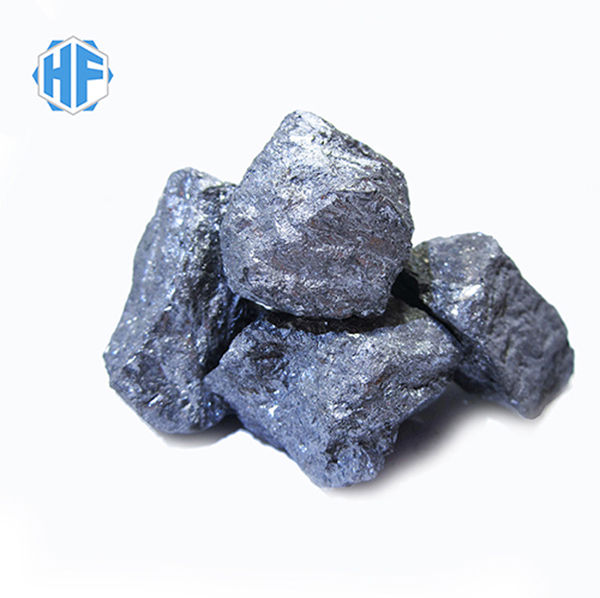
- Sizing Portfolio: Available in fine powder matrices (0-1mm, 0-3mm), granular cuts (1-3mm, 3-8mm), lump fractions (10-60mm, 10-100mm), and raw natural blocks.
- Bulk Logistics Packaging: Standardized in high-tensile export ton bags (moisture-sealed, net weight 1002.5 kg per bag) to guarantee zero atmospheric degradation during ocean freight and long-term warehouse storage. Custom weight parameters are accommodated upon request.
Request Certified Chemical Certificates of Analysis (COA)
Ready to optimize your clean steel parameters or foundry inoculation consistency?
- Contact our metallurgical engineering team today to request detailed element batch sheets and direct wholesale pricing for global ports.
- Request a custom chemical composition or specific particle sizing calculation by submitting your target steel grade specifications and ladle dimensions to our technical lab.